We earn commissions from qualifying purchases at no extra cost to you. This helps us keep Best Cosplay Sewing Machines running. Full disclosure
How to Sew Faux Leather for Cosplay (Without Ruining It)
Faux leather is one of the most common and most frustrating cosplay materials to sew. This guide covers everything from machine settings to finishing techniques so your leather pieces look professional.
Quick Look: Our Top Picks
Sewing Machine Comparison
| Machine | Type | Best For | Stitches | Speed | Rating | |
|---|---|---|---|---|---|---|
| Singer Heavy Duty 4452TOP PICK | mechanical | heavy-fabrics, leather | 32 | 1100 SPM | 4.6 | View Deal |
| Janome HD3000 | mechanical | heavy-fabrics, durability | 18 | 860 SPM | 4.7 | View Deal |
| Brother CS7000X | computerized | beginners, overall | 70 | 750 SPM | 4.6 | View Deal |
Why Faux Leather Is Tricky to Sew
Faux leather behaves nothing like regular fabric. It sticks to presser feet, resists feed dogs, dulls needles fast, and punches permanent holes every time a needle goes through it. Undo a seam in cotton and you are left with tiny holes that close up. Undo a seam in faux leather and you have a visible line of permanent holes.
This means you get one shot at every seam. Your machine settings, needle choice, and technique all need to be right before you start sewing. The good news is that once you know the setup, faux leather is predictable and produces incredible results for cosplay armor, belts, holsters, jacket details, and boot covers.
Choosing the Right Sewing Machine
Not every sewing machine handles faux leather well. Here is what you need:
**Minimum requirements:** - Adjustable presser foot pressure (critical for preventing sticking) - Ability to use size 14-18 needles - At least 800 SPM motor power - Metal internal frame (plastic frames flex under heavy fabric load)
**Best machines for faux leather:** - **Singer Heavy Duty 4452** (~$200) — the best budget option. The 1,100 SPM motor and metal frame handle faux leather without straining. Our top recommendation for cosplayers who work with leather regularly. - **Janome HD3000** (~$500) — premium build quality with superior stitch consistency on thick materials. Worth it if you sew leather weekly. - **Brother CS7000X** (~$250) — handles thin faux leather (under 1mm) with proper setup. Not ideal for thick leather, but works for light leather accents and trim.
If your machine is straining, slowing down, or skipping stitches on faux leather, it is not powerful enough. Forcing it risks burning out the motor.
Essential Supplies for Sewing Faux Leather
**Leather needles (size 14-16)**: These have a wedge-shaped (chisel) point that cuts through faux leather cleanly instead of punching through it. This is the single most important thing you can do. A universal needle on faux leather causes skipped stitches, torn material, and broken needles.
**Teflon presser foot or walking foot**: Regular presser feet stick to faux leather's surface, causing the fabric to bunch and feed unevenly. A Teflon foot ($5-10) glides over the surface. A walking foot ($15-30) actively feeds from the top, eliminating shifting entirely. The walking foot is the better investment.
**Longer stitch length (3.0-4.0mm)**: Every needle hole is permanent, so fewer holes means a cleaner look and stronger seam. Set your stitch length to 3.0-4.0mm instead of the standard 2.5mm.
**Polyester thread (heavy-duty)**: Cotton thread is too weak for faux leather. Use polyester all-purpose thread for light leather, or upholstery-weight polyester thread for heavy leather.
**Wonder clips (not pins)**: Pins leave permanent holes in faux leather. Use wonder clips, binder clips, or double-sided tape to hold pieces together instead.
**Tissue paper**: Place tissue paper between the presser foot and the faux leather if you do not have a Teflon foot. The paper prevents sticking and tears away cleanly after sewing.
Machine Settings for Faux Leather
**Stitch length**: 3.0-4.0mm. Longer stitches mean fewer needle holes, which means stronger seams and a cleaner appearance.
**Stitch type**: Straight stitch for most seams. Avoid zigzag on faux leather unless you are doing an intentional decorative topstitch — the side-to-side needle motion can tear the material.
**Presser foot pressure**: Reduce to medium or low. Too much pressure causes the faux leather to stick and feed unevenly. Too little pressure causes the fabric to slip. Start at medium and adjust.
**Speed**: Sew at moderate speed, not full throttle. Faux leather is less forgiving of course corrections, and slower sewing gives you more control. A consistent moderate speed produces better results than bursts of fast sewing.
**Needle position**: Center position for standard seams. Move the needle position for topstitching close to edges.
**Test first**: Always sew a test seam on scrap faux leather before starting your project. Adjust settings until the stitches are even, the fabric feeds smoothly, and there are no skipped stitches.
Sewing Techniques That Work
**Never backstitch**: Backstitching on faux leather puts multiple needle holes in the same spot, weakening the material. Instead, tie off thread ends by hand or use a very short stitch length (1.0mm) for the first and last few stitches.
**Use a longer seam allowance**: Give yourself 5/8 inch or more. Faux leather seams cannot be ripped out and resewn without visible damage, so extra seam allowance gives you a safety margin.
**Finger-press, do not iron**: Faux leather melts under a hot iron. Use your fingers, a bone folder, or a rubber mallet to flatten seams. If you must use heat, set the iron to the lowest setting and always use a pressing cloth between the iron and the leather.
**Glue before sewing**: Apply a thin line of fabric glue or double-sided tape along seam lines before sewing. This holds the pieces in place without pins (which leave permanent holes) and prevents shifting during sewing.
**Cut with a rotary cutter**: Scissors can stretch and distort faux leather edges. A rotary cutter on a self-healing mat gives cleaner, straighter cuts.
**Go slow around curves**: Faux leather does not ease around curves the way woven fabric does. Make small cuts (notches) in the seam allowance on concave curves, and trim excess on convex curves, before sewing.
Common Mistakes to Avoid
**Using universal needles**: This causes 90% of faux leather sewing problems. Skipped stitches, broken needles, and torn fabric all trace back to using the wrong needle. Use leather needles, period.
**Using pins**: Every pin hole is permanent. Use wonder clips, binder clips, or tape instead.
**Ironing directly**: Faux leather melts, bubbles, and discolors under direct heat. Use a pressing cloth on the lowest setting, or skip the iron entirely.
**Sewing too fast**: Speed causes mistakes, and mistakes in faux leather are permanent. Slow down.
**Skipping the test swatch**: Every faux leather is slightly different in thickness, stretch, and coating. A 30-second test swatch saves you from ruining a cut piece.
**Using too-short stitch length**: The default 2.5mm stitch length creates a perforated line that can tear under stress. Go to 3.0-4.0mm for stronger seams with fewer holes.
Recommended Machines
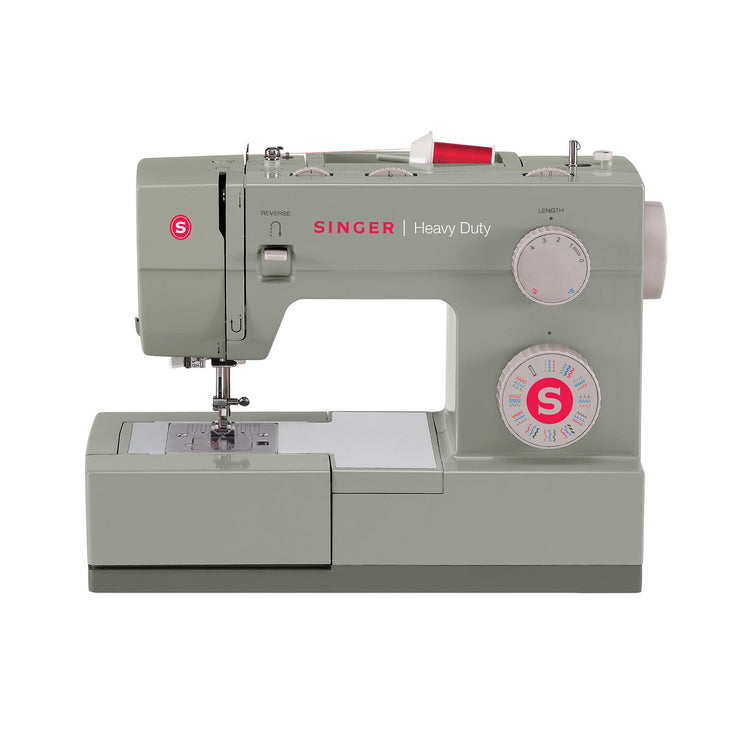
Singer Heavy Duty 4452
If your cosplay involves armor, leather, or layered fabrics, the Singer 4452 is the workhorse you need. It trades fancy features for raw sewing power.
Read Full Review
Janome HD3000
The Janome HD3000 is the cosplayer's long-term investment. If you sew regularly and work with heavy materials, this machine's build quality and stitch consistency are unmatched in its class.
Read Full Review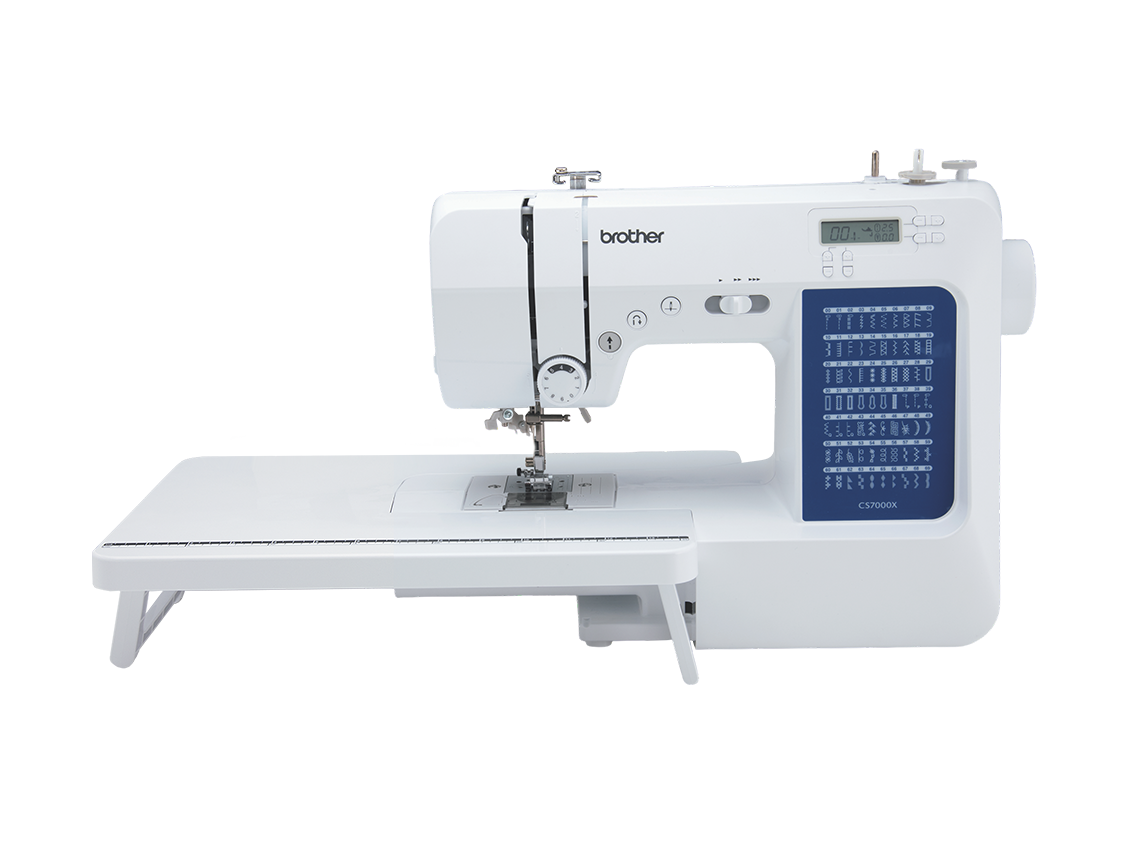
Brother CS7000X
The Brother CS7000X is our top pick for cosplayers who want a reliable, feature-packed machine without the steep learning curve. It handles everything from spandex bodysuits to cotton capes with ease.
Read Full ReviewFrequently Asked Questions
It depends on the thickness. Thin faux leather (under 1mm) works on most machines with a leather needle and Teflon foot. Thick faux leather or multiple layers require a heavy-duty machine like the Singer 4452 or Janome HD3000. If your machine is straining or slowing down, stop immediately to avoid motor damage.
Related Guides
Level Up Your Cosplay Sewing
Get weekly tips, deal alerts, and tutorials straight to your inbox. Join 2,000+ cosplayers who sew smarter.
No spam, unsubscribe anytime. We respect your inbox.